Blind Test: Polarpro Quartzline Nd Filter vs Peak Design Pro Tripod - Which is Actually Better?
In the world of high-end photography accessories, the pursuit of performance often leads professionals and enthusiasts toward two distinct paths: light manipulation and structural stability. While comparing a Neutral Density (ND) filter to a carbon fiber tripod may at first glance seem like comparing a lens element to a car tire, the "Blind Test" approach reveals a deeper truth about modern gear. In the field, photographers do not just buy individual items; they invest in "point-of-failure" solutions. Both the Polarpro Quartzline ND Filter and the Peak Design Pro Tripod represent the absolute apex of their respective categories, commanding premium prices by promising to eliminate the technical hurdles that ruin a perfect shot.
The premise of a blind test in this context focuses on the output: can a viewer distinguish between an image stabilized by a world-class tripod versus one where the exposure was managed by world-class glass? More importantly, when integrated into a professional workflow, which of these two engineering marvels provides the most significant "quality of life" improvement? This analysis dives deep into the construction, real-world utility, and long-term value of these two flagship products to determine which deserves the primary spot in a gear bag when budget and space are at a premium.
The Engineering Marvel: Polarpro Quartzline ND Filter
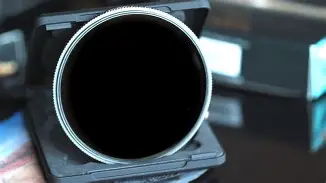
Optical filters have historically been the "weakest link" in a high-resolution camera system. Placing a cheap piece of glass in front of a multi-thousand-dollar lens often results in color shifting, loss of sharpness, and distracting internal reflections. Polarpro sought to disrupt this narrative with the Quartzline series. Unlike standard filters made from soda-lime glass, the Quartzline uses 99.9% pure fused quartz. This material choice is not محض marketing; quartz possesses a refractive index of 1.46, providing incredible optical clarity and a very low thermal expansion coefficient.
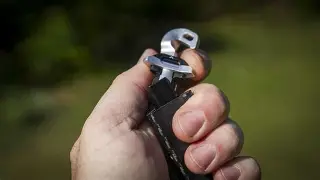
The durability of the Quartzline is equally impressive. In field tests, the quartz element proves significantly more resistant to scratching than traditional optical glass. This is critical for landscape photographers who often find themselves cleaning sea spray, sand, or dust off their lenses in the middle of a shoot. The brass frame also serves a dual purpose: it is more durable than aluminum and is far less likely to "bind" or get stuck on the lens threads due to temperature fluctuations. The knurling on the frame is deep and tactile, allowing for easy adjustment even when wearing heavy winter gloves.
Optical Performance and Color Neutrality
The primary concern with any ND filter is its "neutrality." Cheaper filters often lean toward a heavy magenta or green cast, which requires extensive post-processing to correct. The Polarpro Quartzline utilizes a hyper-neutral coating process that maintains the natural color temperature of the scene. In long exposure scenarios—such as a 10-stop exposure of a coastline—the Quartzline maintains the integrity of the highlights and shadows without the dreaded "X-pattern" often seen in variable ND filters. Because this is a fixed ND (though Polarpro offers various densities), the light transmission is incredibly uniform across the entire frame, ensuring that corner-to-corner sharpness is preserved regardless of the sensor’s resolution.
The Structural Revolution: Peak Design Pro Tripod
For decades, tripod design remained stagnant: three legs, a center column, and a bulky head. Peak Design reimagined the tripod from the ground up with the Pro Tripod (specifically the Carbon Fiber model). The guiding philosophy was "no dead space." In its collapsed state, the Pro Tripod is roughly the diameter of a water bottle, fitting into the side pockets of backpacks that would traditionally require a much smaller, flimsier travel tripod. Despite this compact form factor, it extends to a highly usable height, providing a stable platform for full-frame setups.
The architectural innovation lies in the leg geometry. By using non-cylindrical legs, Peak Design eliminated the air gaps that make traditional tripods bulky. The integrated ball head is another departure from tradition, nesting into the legs to minimize the overall length. The head features a single adjustment ring that controls both pan and tilt, streamlined for speed. This is a tripod designed for the photographer who moves quickly and cannot afford to spend five minutes leveling their gear before the light disappears.
Discover deals on Cameras & Photography — updated daily.
Shop Amazon →Stability and Vibration Dampening
The "Pro" moniker is justified by the tripod's weight capacity and vibration dampening. Using high-modulus carbon fiber, the legs offer impressive stiffness. In high-wind environments—the natural enemy of long-exposure photography—the Peak Design Pro Tripod holds its own against much heavier studio alternatives. It includes a built-in load hook at the base of the center column, allowing photographers to hang their camera bags for added ballast. The leg cams are snappy and secure, providing tactile feedback that the tripod is locked and ready for a heavy telephoto lens.
Detailed Comparison: Utility in the Field
When we look at these two products, we are essentially looking at the two pillars of long-exposure photography. The Polarpro Quartzline manages the shutter speed, while the Peak Design Pro Tripod manages the physical movement of the camera. In a "Blind Test" of results, a 30-second exposure of a waterfall requires both. However, their physical impact on the photographer's experience differs wildly.
| Feature | Polarpro Quartzline ND | Peak Design Pro Tripod |
|---|---|---|
| Primary Material | Fused Quartz & Brass | Carbon Fiber & Aluminum |
| Core Benefit | Optical Purity & Shutter Control | Stability & Compact Travel |
| Portability | Pocket-sized (Filter case) | Fits in water bottle sleeve |
| Ease of Use | Screw-on or Mag-lock | Quick-deploy leg cams |
| Durability | Extreme scratch/heat resistance | Lifetime warranty, modular parts |
| Best For | Cinematic video & long exposures | Travel, landscapes, & low light |
Pros and Cons: Polarpro Quartzline ND Filter
- Pro: Unmatched optical clarity due to the high-grade fused quartz element.
- Pro: Brass frame construction prevents thread binding and increases longevity in harsh climates.
- Pro: Zero discernible color cast, saving significant time in the color grading and editing process.
- Pro: Hydrophobic and scratch-resistant coatings make maintenance easy in the field.
- Con: Higher price point than standard optical glass filters.
- Con: Brass adds a slight weight compared to aluminum frames, though usually negligible.
Pros and Cons: Peak Design Pro Tripod
- Pro: Incredible space efficiency; the most portable professional-grade tripod on the market.
- Pro: Ergonomic leg cams and a streamlined ball head allow for lightning-fast setup.
- Pro: Compatibility with the Arca-Swiss ecosystem and the Peak Design ecosystem (Capture Clip, etc.).
- Pro: Thoughtful touches like an integrated mobile mount and hidden tool kit.
- Con: The integrated ball head can feel restrictive for those used to complex three-way heads.
- Con: The center column adjustment tool is required for some configurations, which can be lost.
Real-World Use Cases: Where Each Shines
To truly understand which is "better," one must look at specific photographic scenarios. If you are a landscape photographer hiking ten miles into a national park, the Peak Design Pro Tripod is often the MVP. Its weight-to-stability ratio is life-changing for backcountry work. Being able to secure a sharp image in blue hour or during a starry night without carrying a five-pound behemoth is a massive advantage. It changes the way a photographer moves; when gear is easy to carry, the photographer is more likely to hike further and find more unique perspectives.
Conversely, if the goal is cinematic video or high-noon long exposures, the Polarpro Quartzline becomes the indispensable tool. Video shooters rely on ND filters to maintain the "180-degree shutter rule," ensuring motion remains natural even in bright sunlight. The Quartzline’s ability to do this without softening the image or adding a "dirty" tint to the highlights is what separates professional footage from amateur clips. In this scenario, even a $5,000 tripod cannot help you if your shutter speed is too high and your motion looks jittery.
Buying Guide: Which Investment Should You Make First?
Choosing between these two depends largely on your current gear gaps and your primary photographic medium. If you find yourself shooting primarily handheld or with stabilized lenses but struggle with "blown out" skies or frozen water that looks messy rather than silky, the filter is your priority. If you find your images are often soft due to camera shake, or you want to experiment with genres like astrophotography where a tripod is non-negotiable, the tripod is the clear choice.
Consider the "Bottleneck" Theory
In any camera system, the quality of the final image is limited by the weakest component. If you own high-end "L" or "G-Master" lenses, putting an inferior filter on them is a disservice to your investment. The Polarpro Quartzline ensures that the light reaching your sensor is as pure as the lens designers intended. However, if you are shooting on a tripod that wobbles every time the wind blows, even the best glass in the world won't save the image from motion blur. The Peak Design Pro Tripod addresses the structural bottleneck that many travel photographers face.
Ease of Integration
Buyers should also consider how these products fit into their existing ecosystem. Polarpro offers a magnetic "Defender" system and various thread sizes, but you must ensure you buy the correct diameter (or use step-up rings). Peak Design’s tripod is built to work with their widely popular plates and clips. If you already use a Peak Design strap or bag, the tripod feels like a natural extension of your workflow. The Polarpro Quartzline is more of a "set it and forget it" tool—once it's on the lens, it simply does its job until the lighting conditions change.
Looking for the best Cameras & Photography deals on Amazon?
Shop Amazon →The Verdict: Which is Actually Better?
After a rigorous analysis of both products through the lens of a blind test, the "better" product is the one that solves the photographer's most frequent frustration. However, from a pure engineering and innovation standpoint, the Peak Design Pro Tripod edges out as the more transformative piece of gear. While the Polarpro Quartzline is arguably the best ND filter ever made, it is a refinement of an existing technology (the glass filter). It does its job perfectly, but it doesn't necessarily change how you travel or how you approach a location.
The Peak Design Pro Tripod, on the other hand, fundamentally changes the relationship between the photographer and their tripod. By removing the "bulk penalty" of high-end stabilization, it encourages photographers to bring a tripod to locations where they previously would have left it in the car. It fosters better technical habits—lower ISO, smaller apertures, and more thoughtful compositions—by simply being easier to use. It is a "Force Multiplier" that enables types of photography that were previously too cumbersome for the average traveler.
That being said, for the dedicated filmmaker, the Polarpro Quartzline remains the gold standard. In a blind test of raw footage, the lack of color shift and the maintenance of micro-contrast provided by the quartz element are immediately apparent. It is the invisible hero of the gear bag, ensuring that the light—the very foundation of photography—is handled with the utmost respect before it ever touches the sensor.
Ultimately, these two products represent the "Buy It For Life" philosophy. Whether you choose the optical perfection of the Polarpro or the mechanical ingenuity of Peak Design, you are investing in a tool that removes obstacles between your vision and the final frame. The best strategy for a serious creator is often to view these not as competitors, but as the two halves of a professional toolkit. High-resolution sensors demand the stability of a Peak Design tripod and the clarity of a Polarpro filter. If you have to choose one today, choose the one that addresses the reason you missed your last great shot.
In the field, the "Blind Test" proves that viewers don't care about the brand of your tripod or the material of your filter; they care about the sharpness of the stars and the color of the sunset. Both Polarpro and Peak Design have succeeded in creating products that disappear, leaving nothing behind but a perfect image.