Mattress Memory Foam Review: Real User Experience After 3 Months
Introduction
I've been sleeping on a 12-inch memory foam mattress for three months now, and I wanted to share a detailed, honest account of what it's been like. I bought this mattress to replace an old innerspring that had started to sag, and after several months of nightly use I have a much clearer sense of its strengths and weaknesses. In this review I’ll cover the feel, construction impressions, sleep performance (heat, motion isolation, support), the small annoyances I've noticed, and whether I think it's worth the money based on real-world use. I'm writing as someone who sleeps mostly on my side but switches to my back during the night; I weigh about 165 lbs and sleep with a partner who shifts a lot.
My Purchase Details (Context)
To give context for my impressions: I bought a queen-size, 12-inch, medium-firm memory foam mattress that arrived compressed in a box. The cover is polyester with a light knit texture and a zippered edge. The listing described it as "medium" on a 1–10 firmness scale and noted gel-infused comfort foam for cooling. There was a 100-night trial and a 10-year warranty included. I set it on a modern slatted platform bed with about 2.5" gaps between slats (solid center support). I did not use a separate topper except during one week when the mattress was new and I wanted extra breathability.
Unboxing and Initial Impressions
Opening the boxed mattress felt like a ritual: it expanded quickly within the first hour and looked nearly full height within 4–6 hours. There was a faint chemical smell at first—off-gassing—but it was nowhere near intolerable. What I found was that airing the mattress in a well-ventilated room for 24–48 hours removed most of the scent. I did sleep on it the first night using breathable cotton sheets and noticed nothing that kept me awake besides the novelty of a new surface.
Comfort and Feel (First Few Weeks vs. After 3 Months)
Initial Feel
Right away the mattress felt noticeably different from my old spring bed. The memory foam provided an immediate "hug"—a comforting contour around my shoulders and hips. On the firmness scale, I’d call it a 6 out of 10 initially: supportive but with enough sinking to relieve pressure on my shoulders when sleeping on my side. I appreciated how the foam cradled pressure points; my shoulders didn’t ache after the first week, which was a win.
How It Changed Over 3 Months
After three months I noticed a subtle softening in the first inch or two of the comfort layer. This is typical with viscoelastic materials—the foam compresses slightly as it adapts to your body heat and weight patterns. The mattress now feels closer to a 5 out of 10 to my perception: still supportive, but with a slightly deeper sink when I sit on the edge or lay on my side. The most concrete change I observed was a small, but detectable, indentation where I lie most often at night. It’s not huge and doesn’t feel like a failure, but it’s something I noticed when I ran my hand over the surface.
Construction and Build Quality
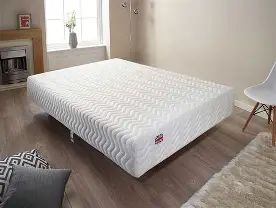
I didn’t take the mattress apart, but from the firmness, rebound, and edge behavior I can infer a typical layered memory foam build: a thin quilted cover, a memory foam comfort layer (likely gel- or open-cell-infused for cooling), a transition foam layer, and a denser base support foam. The cover stitching and zipper feel decent; the zipper moves smoothly and the seams are neat. The cover isn't particularly luxurious, but it’s practical and removable for spot cleaning.
Sleep Performance
Pressure Relief
Pressure relief is where memory foam shines, and in my experience this mattress did a great job reducing shoulder and hip pain after the first week. I noticed mornings were less stiff when I slept on my side. For back sleeping, it provided good lumbar support without feeling hard. For stomach sleeping, I had to work on my pillow height to keep my neck neutral—very dense stomach sleepers might prefer a firmer surface.
Motion Isolation
Motion isolation has been excellent. My partner shifts and gets up several times a night; I barely feel it. The foam absorbs movement rather than transmitting it, which made a noticeable difference compared with our old innerspring bed. If you share a bed with a restless sleeper, memory foam is a real advantage.
Temperature and Heat Retention
Heat was the most mixed area for me. I did notice that I slept a bit warmer during the first month, especially on hot nights. The mattress claims to be gel-infused, and I think that helped keep the temperature from becoming unbearable, but it still traps more heat than my old spring mattress. I mitigated this with breathable sheets, a ceiling fan, and a mesh-top topper on the hottest nights. By the third month the sensation of "too hot" was less frequent—partly because the top layers settled and partly because I adjusted bedding habits.
Looking for the best Electronics deals on Amazon?
Browse Now →Edge Support
Edge support is not the mattress’s strong suit. Sitting on the side feels fine for short periods, but lying on the edge causes a noticeable collapse—about an inch or more of give. For me this is only a real issue when getting dressed on the bed or sitting to put shoes on. If you rely on firm edges for sitting or you prefer to sleep near the edge, consider a model with reinforced edges or an innerspring/hybrid with perimeter coils.
Durability and Signs of Wear After 3 Months
Three months is still early to make definitive claims about long-term durability, but I can report what I’ve seen so far. The mattress has held its shape reasonably well aside from the mild indent where I sleep most. There are no tears, the zipper still functions, and the foam hasn't developed any odd noise or cracking. The only small disappointment is that the surface has a tendency to show slight body impressions faster than I expected—again, not catastrophic, but noticeable when I rotate or smooth the cover.
Smell and Allergens
As I mentioned earlier, off-gassing happened but was short-lived. I slept on the mattress the first night without issue after airing it out a day. I didn’t experience allergic reactions. If you’re sensitive to odors or chemical smells, I recommend leaving the mattress in a well-ventilated room for 48–72 hours before full use.
Maintenance and Practical Notes
- Rotate, don’t flip: This mattress is not flippable, but rotating it every 2–3 months has helped even out impressions.
- Use a supportive base: Slats should be sturdy and close enough together (under ~3" gaps). My platform works well.
- Cover care: The removable cover can be spot-cleaned; check manufacturer instructions before machine washing.
- Protect with a mattress protector: I added a thin, breathable protector to guard against spills and sweat without changing the feel.
Pros & Cons
- Pros:
- Excellent pressure relief for side and back sleepers.
- Superb motion isolation—great for partners.
- Comfortable, cradling feel that reduced shoulder stiffness for me.
- Arrived compressed and expanded quickly; easy setup.
- Quiet and low-maintenance—no springs to creak.
- Cons:
- Warmer than innerspring beds—can retain heat on hot nights.
- Edge support is weak compared to hybrid or coil mattresses.
- Shows mild permanent impressions after three months in the most-used area.
- Not ideal for strict stomach sleepers who need a firmer surface.
- Cover quality is functional but not luxurious.
Comparison Table
| Feature | Memory Foam (My Mattress) | Traditional Innerspring | Hybrid (Foam + Coils) |
|---|---|---|---|
| Initial Comfort | Contour hug, pressure relief for shoulders/hips | Bouncier, less contouring | Balanced: contour plus bounce |
| Motion Isolation | Excellent | Poor to fair | Good (better than springs alone) |
| Edge Support | Weak | Strong (with reinforced edges) | Strong (if reinforced) |
| Heat Retention | Tends to sleep warmer | Best for airflow; stays cool | Moderate; depends on design |
| Durability | Good but watch for impressions | Long-lasting if coils are good quality | Very good when both foam and coils are quality |
| Best For | Side/back sleepers, couples | Back/stomach sleepers who like bounce | Those wanting a mix of contour and support |
Buying Guide: What to Look For in a Memory Foam Mattress
If you're considering a memory foam mattress, here are the key things I paid attention to and the tips I’d share from my experience.
1. Firmness Level
Know your preferred firmness: side sleepers often prefer medium to medium-soft (4–6), back sleepers medium-firm (5–7), and stomach sleepers firmer (7–9). I went with medium and found it balanced for my side/back mix, but if you primarily sleep on your stomach you may want firmer.
2. Foam Density and Layers
Higher density base foam (around 1.8–2.5 lb/ft³ for base) usually means better durability. Comfort layers vary: memory foam (viscoelastic) contours, open-cell foam breathes, and gel-infused foam helps with cooling. Look for full layer descriptions rather than vague marketing language.
3. Cooling Technologies
If you sleep hot, seek open-cell foam, gel infusion, copper or graphite additives, breathable covers, or airflow channels. No memory foam will match the airflow of a coil mattress, but modern designs are much improved.
4. Trial Period and Warranty
Try it for at least 30 nights—memory foam needs time to break in. A 90–120 night trial is better. Check the warranty details for what it covers (sagging beyond a certain depth, seam failures, etc.). My mattress had a 100-night trial and a 10-year warranty, which felt reasonable.
Discover deals on Electronics — updated daily.
Shop Amazon →5. Edge Support and Base Compatibility
Decide if you need firm edges for sitting or sleeping near the perimeter. If so, look for reinforced edges or consider a hybrid. Ensure your bed frame or slats provide proper support—memory foam needs a solid, stable base.
6. Certifications and Materials
Look for third-party certifications like CertiPUR-US for foam content and emissions. Natural or plant-based foams may reduce chemical smell and environmental impact, but they can also change feel and heat retention.
7. Return Policy and Return Costs
Understand the return logistics—some bed-in-a-box companies handle pickups; others charge fees. If you can’t test the mattress in-store, a generous trial and simple return are worth paying a little extra for.
8. Real Owner Feedback
Read multiple reviews and look for common threads: if multiple owners mention sagging at three months, that’s a red flag. I weighed that kind of feedback when choosing my mattress, and I continue to watch for signs of premature wear.
Final Thoughts and Conclusion
After three months, here's my bottom line: the memory foam mattress has been a clear upgrade from my old innerspring in terms of pressure relief and motion isolation. I wake up with less shoulder and upper-back stiffness, and my partner and I sleep through each other's movements much more often than before. The main negatives have been heat retention on warm nights, weaker edge support, and a mild, growing impression where I sleep most nights.
Would I buy it again? Yes, with caveats. If you value contouring comfort and sleep with a partner, memory foam is a strong choice. If you sleep very hot, need robust edge support, or are a heavy stomach sleeper, consider a hybrid or firmer option. For my blend of comfort needs and budget, this mattress has performed well in the early months and feels like a solid, practical choice.
In my experience, the most important things when buying a mattress are realistic expectations and a good trial period. Give the foam a month to settle, rotate it occasionally, and use breathable bedding if you run warm. After three months, I'm satisfied overall and will continue to track how the mattress ages over the coming year.