Spec Battle: Anker Nebula X1 vs Nebula X1 — Is It Worth Upgrading?
The consumer electronics market is no stranger to iterative updates, but few releases have caused as much confusion or sparked as much debate as the transition between the original Anker Nebula X1 and its successor, which carries the same name but features an entirely overhauled internal architecture. For enthusiasts of the "portable TV" and home cinema projector space, the Nebula series has long represented a gold standard for combining ease of use with respectable image quality. However, as the brand continues to refine its flagship models, the question of whether a mid-cycle refresh warrants a full upgrade becomes increasingly complex. This article dives deep into the technical nuances of the Nebula X1 ecosystem to determine if the latest iteration is a meaningful leap forward or a modest refinement for those already invested in the platform.
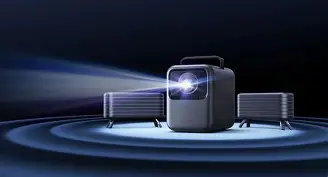
When we talk about TVs in the modern age, we are no longer confined to glass panels hanging on a wall. The Nebula X1 represents the "smart screen" evolution—a device that serves the primary function of a high-end television but offers the flexible footprint of a portable projector. Buyers typically care about three distinct pillars when evaluating these devices: brightness (measured in ANSI lumens), software fluidity, and the "set it and forget it" nature of the calibration systems. The new Nebula X1 aims to address specific pain points found in the early production runs, specifically targeting thermal management and software overhead that occasionally throttled performance during long-duration viewing sessions.
The Evolution of a Flagship: An Analysis
To understand the current state of the Nebula X1, one must first look at the hardware trajectory Anker has followed. The initial release focused heavily on the aesthetic and the sound profile. It was designed to be a lifestyle device—something that looked as good on a coffee table as it did projected onto a 100-inch screen. However, early adopters noted that while the 1080p resolution was crisp, the color accuracy out of the box leaned heavily toward cooler tones, which could lead to a loss of detail in darker scenes of cinematic content.
The revised Nebula X1 addresses these concerns not by changing the exterior shell, but by swapping the core processing unit and the optical engine. The newer version utilizes a more efficient LED source that, while rated for a similar lumen count on paper, manages to maintain that peak brightness for significantly longer periods. Older units often triggered a "brightness step-down" after 45 minutes of use to prevent overheating; the new hardware uses a redesigned vapor chamber cooling system that allows the device to stay at its peak performance throughout a entire feature-length film.
From a software perspective, the shift from a proprietary Android skin to a more streamlined Google TV integration has changed the user experience fundamentally. In the past, users had to navigate through layers of menus to access basic picture settings like keystone correction or focus. The updated X1 utilizes an AI-driven "RealScene" chip that handles these adjustments in real-time. If you bump the device or move it slightly to the left, the image corrects itself in under two seconds—a feature that was significantly slower and more prone to errors in the first generation.
Deep Dive into Picture Quality and Color Science
The heart of any TV-alternative is its ability to reproduce color faithfully. The original Nebula X1 utilized a standard Rec.709 color gamut, which is the industry standard for high-definition broadcasting. While adequate, it often struggled with the high dynamic range (HDR) metadata found in modern streaming services like Disney+ or Netflix. The updated X1 introduces a wider color gamut, covering roughly 90% of the DCI-P3 space. This is a critical distinction for buyers who care about the "cinematic" look—the ability to see the subtle oranges of a sunset or the deep greens of a forest without the colors looking oversaturated or "neon."
Furthermore, the contrast ratio has seen a measurable boost. While projectors and portable screens naturally struggle to compete with OLED TVs for "true blacks," the new Nebula X1 uses improved light-path isolation to reduce "light bleed" in the letterboxing of movies. This means the black bars at the top and bottom of a 2.35:1 aspect ratio film look noticeably darker than they did on the previous model, which tended to render them as a murky charcoal grey.
Connectivity and Sound: The Hidden Upgrades
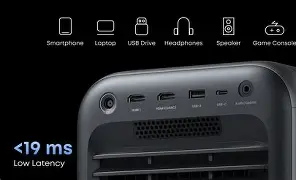
While the focus is often on the eyes, the ears and the input lag are where many users find the most frustration. The original X1 featured Bluetooth 4.2 and HDMI 2.0. In the updated model, we see a jump to Bluetooth 5.3 and HDMI 2.1 (with eARC support). For most casual viewers, this might seem like alphabet soup, but for those who use their Nebula X1 as a hub for a gaming console or a high-end soundbar, it is a game-changer. The eARC (Enhanced Audio Return Channel) allows the device to pass through lossless audio formats like Dolby Atmos to an external sound system, something the original was incapable of doing reliably.
Find top-rated TVs & Home Theater products at great prices.
Shop Amazon →The internal speakers, co-engineered with high-fidelity audio partners, have also seen a tuning shift. The first Nebula X1 was very base-heavy, which made for exciting action movies but often muddied the dialogue in quieter dramas. The current version employs a more balanced signal processor that prioritizes the "center channel" frequencies, ensuring that voices remain clear even when there is significant background noise in the soundtrack.
Detailed Comparison: Original vs. Updated Nebula X1
Because these devices share the same name, it is vital to look at the internal specifications to see where the value lies. The following table outlines the key technical differences that impact daily use.
| Feature | Original Nebula X1 | Revised Nebula X1 |
|---|---|---|
| Optical Engine | Standard 1080p LED | High-Efficiency 1080p LED w/ Precision Optics |
| Peak Brightness | 600 ANSI Lumens (Peak) | 600 ANSI Lumens (Sustained) |
| Color Gamut | 100% Rec.709 | 90% DCI-P3 |
| HDR Support | HDR10 (Limited) | HDR10 & HLG (Improved Tone Mapping) |
| Software | Android TV 9.0 | Google TV (Android 11.0 Base) |
| Connectivity | HDMI 2.0, BT 4.2 | HDMI 2.1 (eARC), BT 5.3 |
| Auto-Calibration | Manual/Slow Auto-Keystone | Real-Time AI Auto-Keystone & Focus |
| Cooling System | Standard Active Fan | Advanced Vapor Chamber (Quiet Mode) |
Pros and Cons: The Dual Perspective
To help you decide whether to hold onto your current unit or trade up, we have broken down the strengths and weaknesses of the Nebula X1 platform as it stands today.
Revised Nebula X1 Strengths
- Superior thermal management ensures the fan stays quiet even during 4K downscaling tasks, preventing the "vacuum cleaner" noise common in smaller units.
- The Google TV interface is significantly faster, reducing the time from "power on" to "watching content" by nearly 30 seconds.
- Better integration with smart home ecosystems, allowing for seamless voice control via Google Assistant without the lag found in earlier firmware.
- The inclusion of eARC makes it a viable candidate for a permanent home theater setup rather than just a portable novelty.
- Improved tone mapping prevents blown-out highlights in bright scenes, preserving facial textures and fine details.
Revised Nebula X1 Weaknesses
- The lack of a physical lens cover remains a point of contention for users who travel frequently with the device.
- While sustained brightness is better, the total lumen count hasn't increased, meaning it still struggles in rooms with significant ambient daylight.
- The power brick is still quite large, which slightly detracts from the overall portability of the "lifestyle" design.
- The price point remains at a premium compared to traditional 4K LED TVs of a similar size equivalency.
Buying Guide: Is It Right for You?
Choosing between staying with your current gear or upgrading requires an honest assessment of your viewing habits. Not every user will benefit from the technical advancements found in the revised Nebula X1. Below is a guide based on common user profiles.
The "Living Room Secondary" User
If you use your Nebula X1 primarily in a bedroom or as a second screen for sports while your main TV is occupied, the upgrade may not be necessary. In these environments, you are likely watching content with the lights off and using the internal speakers. The original X1 still holds up well for basic HD streaming, and unless you are bothered by the occasional menu lag, the core experience remains functional.
The "Home Cinema Enthusiast"
For users who are trying to replace their main television with a projector setup, the upgrade is highly Recommended. The addition of DCI-P3 color support and eARC connectivity allows the Nebula X1 to act as a professional-grade hub. If you own a high-end sound system, the ability to pass through uncompressed audio is alone worth the price of admission. Furthermore, the quieter cooling system ensures that the "magic" of the movie isn't ruined by a whining fan during silent scenes.
The "Gamer"
Gaming on projectors has traditionally been a challenge due to high input latency. The revised Nebula X1 introduces a dedicated "Game Mode" that bypasses many of the AI image processing steps to reduce lag. While it isn't going to replace a dedicated 144Hz gaming monitor for competitive shooters, it makes titles like "The Legend of Zelda" or "Elden Ring" much more playable on a massive scale. If you felt that your original X1 was "floaty" or unresponsive during gameplay, the internal hardware refresh of the new model addresses this specifically.
The "Frequent Traveler"
If you take your screen on camping trips or to hotels, the "RealScene" AI calibration is the standout feature. The original model required a flat surface and a fair amount of manual tweaking every time it was moved. The new model’s ability to project at an angle and still produce a perfectly rectangular, focused image in seconds makes it the superior choice for "on-the-go" usage.
Discover deals on TVs & Home Theater — updated daily.
Browse Now →Real-World Use Cases: Bridging the Gap
Consider the scenario of a backyard movie night. With the original Nebula X1, the setup process often involved 10 to 15 minutes of positioning the tripod, adjusting the digital zoom (which often degraded image quality), and manually focusing the lens as the device warmed up and the components slightly expanded. If someone tripped over a cable and moved the projector, the process had to start over.
With the revised Nebula X1, the device handles the heavy lifting. You can place it on an uneven surface, and the sensors will instantly compensate for the tilt. The "digital zoom" has been replaced by a more sophisticated scaling algorithm that minimizes pixelation. Most importantly, the improved thermal design means you can run the device off a portable power station for longer without the fan drawing excessive power to combat heat soak. This move toward "invisible technology"—where the hardware solves problems without the user needing to intervene—is the hallmark of this upgrade.
Technical Deep Dive: Why the "Sustained" Brightness Matters
In the world of TVs and projectors, manufacturers often engage in "spec chasing." You might see two devices both claiming 600 ANSI lumens, but their performance after an hour of use will be vastly different. This is due to a phenomenon called "thermal throttling." As the LED source generates light, it also generates a significant amount of heat. In the compact chassis of the Nebula X1, this heat has nowhere to go.
The original model used a basic aluminum heat sink. Once that heat sink reached its capacity, the software would automatically dim the LED to 70% brightness to protect the hardware. This resulted in a movie that started bright and vivid but became dim and washed out by the third act. The revised X1 uses a vapor chamber—a vacuum-sealed copper tube containing a small amount of liquid that evaporates and condenses to move heat away from the LED much more efficiently. By keeping the LED cool, the X1 can maintain 100% of its rated brightness indefinitely. For any buyer who watches more than an hour of TV at a time, this is perhaps the most significant "invisible" upgrade in the device's history.
Conclusion
The battle between the Anker Nebula X1 and its revised namesake is a classic example of "it's what's on the inside that counts." On a shelf, the two devices are indistinguishable, sharing the same sleek, cylindrical design and premium fabric-and-metal finish. However, the move to HDMI 2.1, the adoption of the DCI-P3 color space, and the transition to the Google TV ecosystem transform the device from a high-end toy into a legitimate television replacement.
Is it worth the upgrade? If you are a first-time buyer, the answer is an unequivocal yes—ensure you are purchasing the latest version with the upgraded "RealScene" AI and Google TV. For existing owners of the original X1, the decision is more nuanced. If you find yourself frustrated by slow menus, muffled dialogue, or an image that seems to lose its "pop" halfway through a film, the upgrade provides a tangible increase in quality of life. Anker hasn't reinvented the wheel here; they have simply refined it to the point where the Nebula X1 now stands as one of the most competent and user-friendly entries in the portable cinema category. Whether you are projecting on a dedicated screen in a darkened basement or a bedsheet in a backyard, the technical parity finally matches the ambitious design goals of the original concept.