The Truth About the Alliwava U58 Mini Pc: Pros, Cons, and Verdict
Introduction
The mini PC market has matured rapidly: compact systems now offer capabilities that once required full-size desktops. Among the recent entrants, the Alliwava U58 Mini Pc has attracted attention for blending a small footprint with configurable performance. This article takes an evidence-based, practical look at the U58: what it does well, where it falls short, and whether it matches the needs of typical buyers. The goal is to provide a clear, third-person evaluation grounded in real-world use cases—home office, media center, light creative work, small business, and digital signage—so readers can decide whether the U58 is the right mini PC for them.
What the Alliwava U58 Is (and What It Isn’t)
The Alliwava U58 is a compact desktop-class mini PC that targets users who want a full Windows or Linux experience in a much smaller chassis than a traditional tower. It is positioned as a versatile, general-purpose machine rather than a high-end gaming rig or workstation for heavy 3D rendering. In practice, the U58 often ships in different configurations—ranging from energy-efficient, entry-level CPUs to more capable multi-core processors—paired with user-selectable RAM and storage options. This flexibility makes it suitable for many scenarios but also means buyer experience depends heavily on the chosen configuration.
Design and Build Quality
Physically, the U58 follows the compact mini PC aesthetic: a small rectangular chassis designed for desk placement or VESA mounting behind a monitor. The case is typically a mix of metal and plastic, with a focus on keeping size and weight down. Build quality is generally solid for the price class; however, finish and panel fitment can vary between batches. Alliwava tends to prioritize functional design—easy access to expansion slots and clearly labeled ports—over premium touches like machined aluminum unibody construction.
For buyers who care about aesthetics, the U58 will blend unobtrusively into most setups. For users who value ruggedness or premium industrial design, higher-end mini PCs will feel more refined. Importantly, the U58’s compact dimensions make it suitable for tight workspaces, behind-the-monitor mounts, and tucked-away media centers.
Hardware and Performance Analysis
Performance is the most critical consideration when evaluating any mini PC. The Alliwava U58 spans several performance tiers depending on the configuration chosen. In entry-level builds it’s perfectly capable of handling web browsing, office apps, video streaming, and light multitasking. Mid-range configurations with faster multi-core CPUs and more RAM handle heavier multitasking, light photo editing, and some video transcoding. High-end configurations, if available, push into competent productivity machines that can support software development tasks, virtual machines, and more intensive media workflows—though they still sit below enthusiast desktop platforms for sustained multi-core workloads.
Graphics capability is typically integrated—sufficient for 4K video playback, hardware-accelerated streaming codecs, and everyday graphical tasks. Gamers should not expect modern AAA titles at high framerates; instead, the U58 is a good fit for older or less demanding games and cloud gaming services. Thermal headroom in a mini chassis is limited, so sustained high-load performance will depend on the particular CPU option and the thermal solution implemented in each unit.
Real-world Performance Examples
- Office productivity: Spreadsheets, video calls, and document editing run smoothly on modest configurations (8–16 GB RAM, modern dual/quad-core CPU).
- Media consumption: Plays 4K video streams and offers multiple display outputs for multi-monitor setups; streaming and local playback are reliable.
- Light creative work: Photo editing and short-form video editing are possible on mid-range configurations; export times are reasonable but slower than a full-sized desktop.
- Developer workflows: Small to medium-sized development tasks and local testing work fine, but large builds and heavy containerized workflows benefit from more RAM and cores.
- Home server / Plex: As a compact media server, the U58 can handle streaming to multiple devices when paired with sufficient storage and CPU capabilities for transcoding.
Connectivity and Ports
One of the U58’s strengths is practical connectivity. Typical port layouts include multiple USB-A ports, at least one USB-C with data and sometimes DisplayPort capability, gigabit Ethernet, HDMI and/or DisplayPort video outputs, and a 3.5mm audio jack. A full-size SD card reader or additional USB ports can appear on certain configurations. Dual-display support is common, which is important for productivity and digital signage use cases.
For remote workers and small business deployments, wired Ethernet and multiple USB ports for peripherals are particularly useful. Thunderbolt is not typically available in this product class, so users who require very high-speed external GPU or storage connections should account for that limitation.
Storage and Upgradability
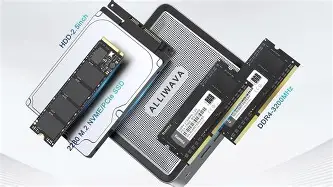
A strong selling point of many mini PCs, including the U58, is the ability to upgrade memory and storage. The chassis often allows access to one or more SODIMM RAM slots and at least one M.2 slot for NVMe SSDs. Some variants also include a 2.5-inch drive bay for SATA SSD/HDD, which is useful for storage-heavy applications like media libraries or local backups.
Buyers who value future-proofing should choose a configuration with free expansion slots or plan to upgrade RAM and add an NVMe drive after purchase. This flexibility prolongs the useful life of the machine and makes the U58 a better long-term investment than sealed mini PCs with soldered RAM and storage.
Discover deals on Laptops & Computers — updated daily.
View Offers →Thermals, Acoustics, and Reliability
Thermal management in a mini PC is always a compromise between size, cooling capacity, and noise. The U58 typically uses a small active cooling system that keeps temperatures in check during normal desktop workloads. Under heavier sustained loads, the fan will ramp up; how loud this is depends on the specific unit and environment. For quiet home-office use, mid-range CPUs with efficient architectures are preferable to higher-TDP options.
Reliability reports are mixed across small manufacturers: some users experience long, trouble-free service, while others encounter issues related to firmware, drivers, or thermal throttling. Choosing a reputable seller or checking warranty and support options helps reduce the risk. Routine maintenance—keeping vents clear and ensuring good airflow around the unit—improves longevity.
Software and OS Support
Compatibility with Windows is straightforward: the U58 typically ships with Windows or supports standard Windows installations. Driver quality and firmware updates matter; buyers should verify that network, audio, and display drivers are provided or available for the chosen configuration. Linux support is generally acceptable for common distributions, but occasional tweaking may be required for power management, Wi‑Fi drivers, or unique hardware components. Enthusiasts running Linux should check community forums for reported compatibility notes before purchasing a specific configuration.
Real-World Use Cases: Who Should Consider the U58?
Different buyers prioritize different attributes. Below are practical scenarios where the Alliwava U58 is a sensible choice:
- Home office user: Someone who needs a compact, quiet machine for video conferencing, email, and document editing will appreciate the U58’s small footprint and adequate daily performance.
- Media center / HTPC: Its multiple display outputs and ability to decode modern codecs make it a strong candidate for living-room streaming or local media playback.
- Small business desktop: For reception stations, point-of-sale terminals, or office workstations that don’t require heavy computational power, the U58 offers an affordable, space-saving option.
- Digital signage or kiosk: The compact chassis and flexible output/boot options make deployment behind displays straightforward.
- Light creative or developer workflows: Photographers, content creators, and developers who don’t need full workstation power can use a higher-spec U58 for editing, testing, or lightweight builds.
Pros & Cons
Below is a concise list of strengths and weaknesses to help buyers quickly evaluate the U58 against their priorities.
- Pros:
- Small footprint ideal for cramped desks, behind-monitor mounts, or living rooms
- Usually configurable—buyers can choose RAM and storage levels to match needs
- Multiple display outputs and practical port selection for peripherals
- Good power efficiency for everyday tasks; lower power consumption than many desktops
- Upgradability in many variants: SODIMM slots and M.2 NVMe support
- Quiet in light use scenarios
- Cons:
- Performance limited relative to full-size desktops, especially for sustained heavy workloads
- Thermal throttling risk under prolonged high CPU/GPU load
- Build and finish quality vary between units and batches
- Firmware, driver support, and manufacturer updates can be inconsistent
- Not suitable for serious gaming or high-end professional rendering tasks
Comparison Table
| Model | Typical CPU Options | RAM / Storage | Graphics | Ports | Upgradability | Best For |
|---|---|---|---|---|---|---|
| Alliwava U58 | Entry to mid-range mobile/desktop CPUs (configurable) | SODIMM RAM, M.2 NVMe, some with 2.5" bay | Integrated graphics (suitable for 4K playback and light games) | Multiple USB-A, USB-C, HDMI/DisplayPort, Gigabit Ethernet | RAM and storage upgradable in most variants | Home office, HTPC, small business desktops |
| Typical Intel NUC (comparable class) | Mobile-class Intel Core U/H processors | SODIMM, M.2 NVMe; some models solder RAM | Integrated Intel Iris/Xe (on newer models) | USB, HDMI/DP, Ethernet on selected models | Varies by model; many are upgradable | Compact desktops, pro-sumer uses |
| Compact Mini PC (competitor) | ATX-like desktop chips (in larger chassis) or low-power SoCs | Varies: soldered vs. upgradable | Integrated or discrete in larger designs | Depends on chassis size—can include more ports | Limited in the smallest models; greater in larger mini-ITX cases | From media streaming to light gaming depending on size |
Buying Guide: How to Choose the Right U58 Configuration
When looking at the Alliwava U58, buyers should make choices based on intended use. The following checklist helps match configuration to priorities.
1. Define primary use case
Decide whether the device will be used for web and office tasks, media consumption, light creative work, or as a small server. Office and media tasks need less CPU and RAM; photo editing and virtualization need more.
2. Choose CPU and cores appropriately
For typical office use and streaming, dual- or quad-core low-power CPUs are sufficient and quieter. For multitasking, development, or light creative work, favor quad-core or higher and higher base clock speeds where possible.
3. Prioritize RAM and storage
Minimum 8 GB RAM for Windows; 16 GB is recommended for multitasking or light editing. Choose NVMe SSDs for snappy responsiveness. If large media libraries are needed, select a model with a 2.5-inch bay or plan for external storage.
Looking for the best Laptops & Computers deals on Amazon?
Browse Now →4. Check ports and display support
Ensure the U58 configuration offers the number and type of display outputs required. For multi-monitor productivity, verify dual 4K or 1440p support. Confirm the number of USB ports for peripherals and whether USB-C offers DisplayPort or PD features if required.
5. Consider thermals and noise
If the unit will live in a quiet environment or be mounted behind a TV, look for lower-TDP processors and user reports about fan noise. Some buyers intentionally choose slightly less powerful CPUs for quieter operation.
6. Verify OS compatibility and driver availability
If planning to run Linux, check community notes and compatibility reports for the specific configuration. For Windows, ensure that drivers are available from the vendor or mainstream manufacturers.
7. Warranty and vendor support
Confirm warranty length and what it covers. Small vendors vary in support quality; established retailers or sellers with clear return policies reduce risk.
8. Future-proofing and expandability
Buy configurations with at least one free SODIMM slot or an extra M.2 slot when possible. Upgradability prolongs the device’s useful life and provides better value over time.
Maintenance Tips
- Keep vents unobstructed and place the unit where airflow is available.
- Periodically clean dust from vents and the fan with compressed air to maintain thermal performance.
- Update firmware and drivers when stable releases are available to address performance and compatibility issues.
- When upgrading RAM or storage, follow antistatic precautions and consult the vendor’s service manual if available.
Conclusion
The Alliwava U58 Mini Pc delivers a compelling blend of compactness, configurability, and everyday performance. For buyers who prioritize small form factor, adequate connectivity, and the ability to upgrade RAM and storage, the U58 is a practical choice for home office setups, media centers, and small-business desktops. It is not intended as a replacement for high-end gaming rigs or workstation-class desktops, and prospective buyers should weigh thermal characteristics and vendor support when making a purchase decision.
Ultimately, the U58 is strongest when matched to realistic expectations. Choosing the right CPU, ensuring sufficient RAM and fast storage, and confirming port and display needs will produce a versatile, unobtrusive machine that handles most modern computing tasks with ease. For those who want a compact, serviceable PC for productivity, streaming, and light creative work, the Alliwava U58 represents a solid option—provided the configuration and vendor support align with the buyer’s needs.