Why Everyone is Buying the Samsung Galaxy Z Trifold (Full Review)
I've been using the Samsung Galaxy Z Trifold as my primary phone for the past five months. When the idea of a three-panel foldable first piqued my curiosity, I wasn't sure whether it would be a polished, practical device or a clever piece of engineering with glaring compromises. What I found was a phone that genuinely reshapes how I use a pocket computer — and also one that forces some trade-offs into my daily routine. In this review I’ll walk through my hands-on experience, the things I loved, the things that annoyed me, and who I think should consider buying one.
Introduction: Why the Trifold caught my eye
I bought the Trifold because I wanted the productivity gains of a tablet without carrying a second device. The promise was simple: unfold more screen, run more apps side-by-side, and still slip the device into a coat pocket when needed. After several months of commuting, editing documents, watching long-form videos, and taking photos, I can say the Trifold delivers on that core idea — but it also introduces a few realities you won't notice in promo videos.
Design & build: ambitious, weighty, and surprisingly polished
Out of the box the Trifold felt like a statement piece. The matte frame, slightly rounded corners, and the way the device folds into a compact slab give it a premium presence. In my experience, the build quality is better than I expected for such a complex mechanical product — the hinges are smooth and the outer finish resists fingerprints reasonably well.
That said, the device is not light. After a full day in my pocket I noticed a consistent impression of weight. I was surprised by how much that affects comfort during long city walks or when I switch pockets frequently. The Trifold doesn’t disappear the way slim glass phones do; it announces itself.
Another design note: when folded, the Trifold’s thickness is noticeably more than a regular smartphone. I appreciated the sturdiness — it never felt fragile in my hands — but one thing that bothered me was how it sits on a flat table. Typing with it partially folded (for quick replies or notes) is stable, but placing it on a soft surface like a couch cushion can let it wobble if you’re not careful.
Display experience: immersive, multitasking bliss, and the crease conversation
Unfolded, the Trifold gives you a workspace that's genuinely useful. I used it for editing spreadsheets, reading long-form articles, and splitting two to three apps across panels. In my experience, having an entire email thread on one panel, a document on another, and a web browser on the third was liberating. For travel days, I could watch a movie on the center panel while keeping a chat and navigation open — that level of simultaneous context saved me from switching apps constantly.
Brightness, color accuracy, and viewing angles have been excellent for both indoor and outdoor use. I often used the Trifold outside at midday and found the screen readable, though direct sunlight will still wash out highlights compared to a high-end OLED slab. What many people ask about — the creases between panels — is worth a detailed note. I can see the creases if I look closely, especially when viewing uniform backgrounds or reading very small text at low brightness. However, in daily media consumption and most productivity tasks the creases fade into the background. I noticed them most when dragging windows across panels or when using white backgrounds for reading long documents.
Hinge mechanics & durability: confidence with caveats
The hinge is the most impressive mechanical part of the Trifold. After months of opening and closing multiple times per hour, I never felt any sticking or looseness. The action is relatively silent and consistent. Samsung’s improvements over earlier foldable hinges are obvious here — I felt confident slipping the phone into my bag without worrying excessively about debris getting into the mechanism.
Still, I remained cautious. One thing I noticed was that pocket lint can accumulate near the outer seam over a week of use, and I made it a habit to clean the edges gently with a microfiber cloth. If you prefer an absolutely carefree device, this will be a small but persistent maintenance item to remember.
Looking for the best Mobile Phones deals on Amazon?
View Offers →Performance & software: powerful hardware with helpful multitasking software
In my real-world use, the Trifold handled everything I threw at it. Apps launched quickly, switching between three active apps was fluid, and gaming on the center+side panels was a surprisingly good experience when I wanted to kill some time. For day-to-day tasks like email, messaging, navigation, and streaming, the Trifold never felt underpowered.
Samsung’s software optimizations for multi-window use are genuinely purposeful. I noticed that app continuity (switching an app from one panel to two-panel mode) worked almost seamlessly for the apps I used most: a browser, a note-taking app, and an office suite. Developers are catching up, so the best experience is with apps that explicitly support multi-pane layouts — otherwise you’ll still rely on Android’s generic split-screen, which is fine but not as elegant.
One software annoyance I ran into: some apps don’t remember their panel layout consistently after a restart. I’d set up a three-app workspace, power-cycle the device, and find one app reverting to single-window. It’s a minor friction, but after several months it became noticeable enough to mention.
Cameras: competent, but not the main reason to buy
I took the Trifold on weekend trips and used it as my only camera multiple times. The main shooter produces solid photos in daylight: sharp detail, pleasant color, and reliable autofocus. Low-light shots are decent but not class-leading; the device tries to balance detail and noise, sometimes leaning toward noise reduction that softens textures.
The flexibility of framing with the large inner display is a real plus — composing a shot on a nearly tablet-sized screen makes detail-checking and precise cropping more enjoyable. For casual users and family photos the camera is more than adequate. If your priorities are professional-grade low-light photography or telephoto performance, you might still prefer a compact camera or a flagship phone that emphasizes cameras over screen form factor.
Battery life & charging: a day of productivity, sometimes two with light use
Battery life varies with how you use the expanded display. When I frequently ran three active panels and streamed video, I was getting a solid full day of use — typically about 10–12 hours between charges. On light days (mostly reading, occasional messaging), the device would stretch toward two days. What I found was that my usage pattern determined whether I needed to charge in the afternoon or could comfortably wait until evening.
Charging speeds are respectable but not turbo-fast compared to some competitors. Wired charging gives a reliable top-up and wireless charging worked well with my home accessories. I appreciated that the Trifold has sufficient thermal management — after extended gaming sessions the phone warmed, but I didn’t notice severe throttling.
Everyday usability: pockets, typing, calls, and single-handed tasks
Typing on the inner panels is a strange delight. The large on-screen keyboard makes long replies far less painful than on a standard phone. However, single-handed operation is still a limitation — the device is designed primarily for two-handed interactions when unfolded. I used the Trifold for quick one-handed tasks by keeping it folded; the outer display is usable and responsive for notifications and short replies.
Discover deals on Mobile Phones — updated daily.
See Deals →Phone calls were clear, and the dual-speaker setup delivered pleasant audio. I used speakerphone for a lot of hands-free calls and the call quality was consistently good even in noisy environments.
What I appreciated most
- True multitasking: I genuinely reduced friction in my work: editing a doc while referencing research and keeping chat open saved me time.
- Immersive media: Watching movies or long-form video felt more like a tablet experience without carrying a separate device.
- Build confidence: The hinge and finish convinced me that this isn’t a fragile experiment; it feels like a device designed to be used every day.
What disappointed me or felt like trade-offs
- Size and weight: It’s heavier and thicker than I anticipated — comfort in pockets is a real trade-off.
- App continuity quirks: Some apps don’t always behave consistently with multi-pane layouts after restarts.
- Visible creases on close inspection: If you're a stickler for perfect uniformity in displays, the panel seams will bother you in some scenarios.
Pros & Cons
- Pros:
- Massively productive when you use multi-window workflows
- High-quality hinge and build
- Excellent for media consumption
- Good all-around performance for daily tasks
- Cons:
- Heavier and thicker than standard phones
- Minor software rough edges with window management
- Visible panel seams in certain viewing conditions
- Higher price and specialized use-case — not for everyone
How the Galaxy Z Trifold compares (quick table)
| Feature | Galaxy Z Trifold (my experience) | Typical Large Foldable (e.g., Fold series) | Large Slab Phone (e.g., flagship non-fold) |
|---|---|---|---|
| Screen real estate | Massive — tablet-like when fully open, ideal for multitasking | Large, but usually two-panel multitasking is less expansive | Single large screen; no true multi-panel workspace |
| Portability | Less pocket-friendly; thicker and heavier | More portable than Trifold, still thicker than slabs | Most pocket-friendly of the three |
| Durability | Solid hinge engineering; mindful maintenance advised | Generally robust; simpler hinge mechanics | Best straightforward durability (no folding parts) |
| Multitasking | Best-in-class for running three apps simultaneously | Very good for two apps; three is possible but cramped | Limited to split-screen or app switching |
| Battery life | Depends on use — full day heavy, can reach two days light | Comparable; varies by device | Often better sustained efficiency on single-screen designs |
Buying guide: who should buy the Galaxy Z Trifold?
After using the Trifold daily for months, I’ve developed a pretty clear mental checklist of who benefits most from this device and who should probably look elsewhere.
Consider the Trifold if:
- You frequently multitask with three or more applications and want fewer context switches. In my experience, the time saved alone can justify the form factor.
- You consume a lot of media and prefer a larger, more immersive screen without carrying a separate tablet.
- You value novelty combined with practicality: you want a device that changes how you work on the go and you’re comfortable with a device that requires a little extra care (weight, hinge maintenance).
Skip the Trifold if:
- You prioritize ultra-light, pocketable devices. The Trifold is noticeably heavier and thicker than standard phones.
- You need the absolute best camera performance for night photography; while competent, the Trifold’s camera system is not the main selling point.
- You want a no-fuss device that works identically to traditional phones in every environment. The Trifold introduces new interactions that are delightful for some and unnecessary for others.
Other buying considerations
Warranty and protection: Given the complexity of the hinge, check service and warranty options in your region. I felt more confident knowing local service centers had foldable experience, and that gave me peace of mind when I traveled.
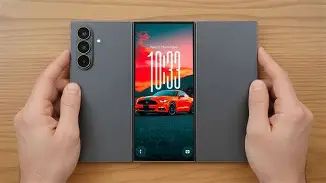
Case and accessories: You’ll want a case designed for the Trifold’s folding geometry. My first few generic cases felt clumsy, and investing in a case engineered for foldables improved handling and pocket comfort.
Final thoughts and conclusion
After five months with the Galaxy Z Trifold, I still find myself smiling when I open it and put three apps side-by-side. The device reshaped how I handled email triage, travel planning, and consuming long-form content. It rewarded me with real productivity wins and moments of pure delight that traditional phones can't provide.
That said, owning the Trifold is a commitment to a different mobile experience. The weight, the thicker profile, the occasional app inconsistency, and the visible seams under certain conditions are real trade-offs. In my experience, the Trifold is worth it if you value screen real estate and multitasking and are willing to accept a less pocket-friendly device. If you lean toward minimalism or prioritize the absolute best camera hardware, a more traditional flagship or a separate tablet might suit you better.
In short: I was surprised by how often I reached for the Trifold instead of carrying two devices. It hasn't replaced everything — I still sometimes miss the pocket ease of a slim slab phone — but it has become the single device I reach for whenever I want to do more than one thing at a time. If that sounds like your day-to-day, try one in person: the Trifold turns multitasking from a chore into something that actually flows.